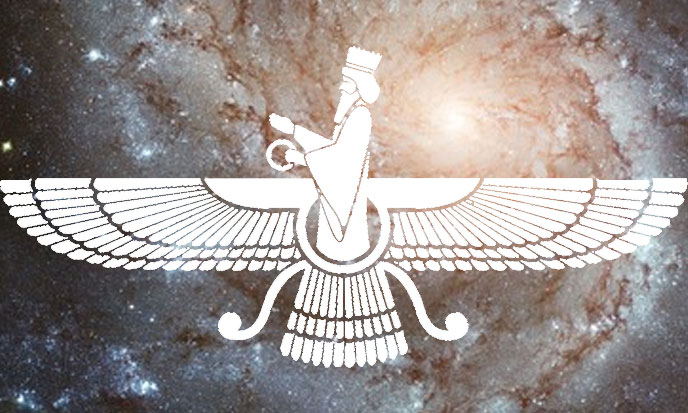
Hello, Today I am not gonna try to change your thinking but instead, I am going to inform you about a religion known as Zoroastrianism.
Zoroastrianism is an ancient Persian religion that may have originated as early as 4,000-8,000 years ago. Arguably the world's first monotheistic faith, it's one of the oldest religions still in existence. Zoroastrian is a religion that originated in Iran thousands of years ago.
Now the question arises why did Zoroastrians exile their homeland Iran and land up in India, and why does India have the highest number of Zoroastrians and not Iran. So many years ago, when the Arab conquerors were invading countries around the world, they reached Iran.
During that time Iran was completely under Zoroastrian influence and on entering Iran the Arabs had started destroying the Zoroastrian temples and killing the natives. In a decade or less, half of the Zoroastrians in Iran were dead, the rest were alive because they didn’t oppose the decisions made by Arabs. Slowly the Muslims started forcingly converting the Zoroastrians into Muslims.
At this crucial moment the Zoroastrians needed someone to make decisions for them, the Zoroastrians at that time didn’t have a king they had a high priest, Dastur Magawan Nariosang Dhawal, under whose leadership they sheltered. Dastur Magawan Nariosang Dhawal decided to escape the religious persecution by the Muslims, so Zoroastrians decided to flee Iran in 8 large ships. The Zoroastrians couldn’t leave behind their pious fire (known as Atash), the Fire which was collected through 16 different sources, including lightning, fire from a cremation pyre, fire from trades where a furnace is operated, fires from the hearths, etc. So, on a decided night most of the Zoroastrians exiled Iran in 8 ships with each ship having an Atash.
Finding for land the 8 ships reached island Div where the Zoroastrians held shelter for 19 years. They had made the small island their new home until Dastur Magawan Nariosang Dhawal sensed danger on that island and decided to go further East towards Hind.
The ships reached the Sanjan coast in Gujarat where King Jadi Rana ruled, he was a noble and generous Hindu King. The Zoroastrian High Priest requested the King for refuge and shelter in his Kingdom, in reply the King sent a glass full of milk to the emigrants stating that his Kingdom didn’t have enough expanse to accommodate the foreign community. The Zoroastrian High Priest mixed a handful of sugar into the glass of milk and sent it back to the king stating that the Zoroastrians will mix in your Kingdom as the sugar mixed with milk and moreover bring sweetness into your lives. This gesture by the High Priest impressed the Hindu King so he allowed the Zoroastrian to live in Gujarat but he had many terms and conditions like following the Hindu-Gujarati tradition of wearing bangles, making rangoli (Indian art form) everyday, hanging toran (decorative door hanging) outside the house every day and that the Zoroastrians should adapt to Hindu-Gujarati culture and language.

Compared to King Rana’s Mountain of requests, the Zoroastrians only had one condition, that no one will ever enter the Zoroastrian fire temple and that the Zoroastrians must be allowed to follow their faith. Being a pure gentlemen King Rana agreed to the condition without any questions.
Over the years, the Zoroastrians evolved and transformed themselves into Parsis.
Many years passed the Atash was shifted to various places and at the moment it resides in a small town known as Udvada in Gujarat. Till date the same fire (Atash) that was brought to India 1200-1500 years ago stays alive and powerful.
The Promises which were made to King Rana thousands of years ago are still followed by the Parsis, still, the Parsis have Rangoli outside their houses, still, the Parsis hang toran on the entry of their houses and, still, the Parsi ladies wear Gujarati bangles.
After so many years still, the Parsis haven’t forgotten the promises done to the Hindu King and nor have the Indian natives forgotten their promise of not entering the Fire temple. Moreover, not even a single non-Zoroastrian has entered any fire temple till date. So, the promises were kept and followed.
As of 2018, estimates show that there are some 100,000 to 200,000 Zoroastrians worldwide, with the notable Parsi community comprising a large part of this figure and numbering at around 60,000 in India. The Parsi religion is known as one of the most peaceful religions throughout the world and one of the richest as well.
Over the years, the Zoroastrians evolved and transformed themselves into Parsis.
Many years passed the Atash was shifted to various places and at the moment it resides in a small town known as Udvada in Gujarat. Till date the same fire (Atash) that was brought to India 1200-1500 years ago stays alive and powerful.
The Promises which were made to King Rana thousands of years ago are still followed by the Parsis, still, the Parsis have Rangoli outside their houses, still, the Parsis hang toran on the entry of their houses and, still, the Parsi ladies wear Gujarati bangles.
After so many years still, the Parsis haven’t forgotten the promises done to the Hindu King and nor have the Indian natives forgotten their promise of not entering the Fire temple. Moreover, not even a single non-Zoroastrian has entered any fire temple till date. So, the promises were kept and followed.
As of 2018, estimates show that there are some 100,000 to 200,000 Zoroastrians worldwide, with the notable Parsi community comprising a large part of this figure and numbering at around 60,000 in India. The Parsi religion is known as one of the most peaceful religions throughout the world and one of the richest as well.
Humata, Hukhta, Hvarshta
Good Thoughts, Good Words, Good Deeds